Review your policy or speak with your commercial insurance provider to understand your coverage. We can help document the discovery and the scope of work, and we work directly with your adjuster to ensure the abatement process meets all regulatory standards for your claim.
- Commercial asbestos removal
Commercial Asbestos Removal Across Canada
Safe, compliant commercial asbestos abatement. FloodWyse follows all regulations for testing, containment, and removal to keep your building safe.
- OUR IMPACT IN NUMBERS
10+
Years of Experience
Trusted restoration experience across homes and businesses.
500+
Properties Restored
Successful recovery projects completed with care.
24/7
Emergency Response
Ready when urgent property damage happens.
98%
Client Satisfaction
Focused on clear service and dependable results.
Safe, legal, and professional abatement for your commercial property.
If you are renovating, repairing, or demolishing a commercial building, you may be dealing with asbestos. It was used in thousands of buildings across Canada before the 1990s. It is a dangerous material. It is heavily regulated. And it absolutely needs to be handled by professionals. FloodWyse provides commercial asbestos removal services. We follow all regulations, protect your workers, protect the public, and get the job done right.
Where Asbestos Hides in Commercial Buildings
Asbestos was a popular building material because of its fire resistance and insulating properties. It can be found in many different areas of a commercial property, including:
- Insulation: Pipe wrap, boiler insulation, and attic insulation.
- Flooring: Vinyl floor tiles and the adhesive used to stick them down.
- Ceilings: Acoustic ceiling tiles and textured finishes.
- Roofing: Felt, shingles, and flashing.
- Drywall: Joint compound and mud used to seal drywall seams.
- Mechanical Systems: Gaskets and packing in older heating systems.
If your building was constructed or renovated before the 1990s, there is a chance asbestos is present somewhere in the structure.
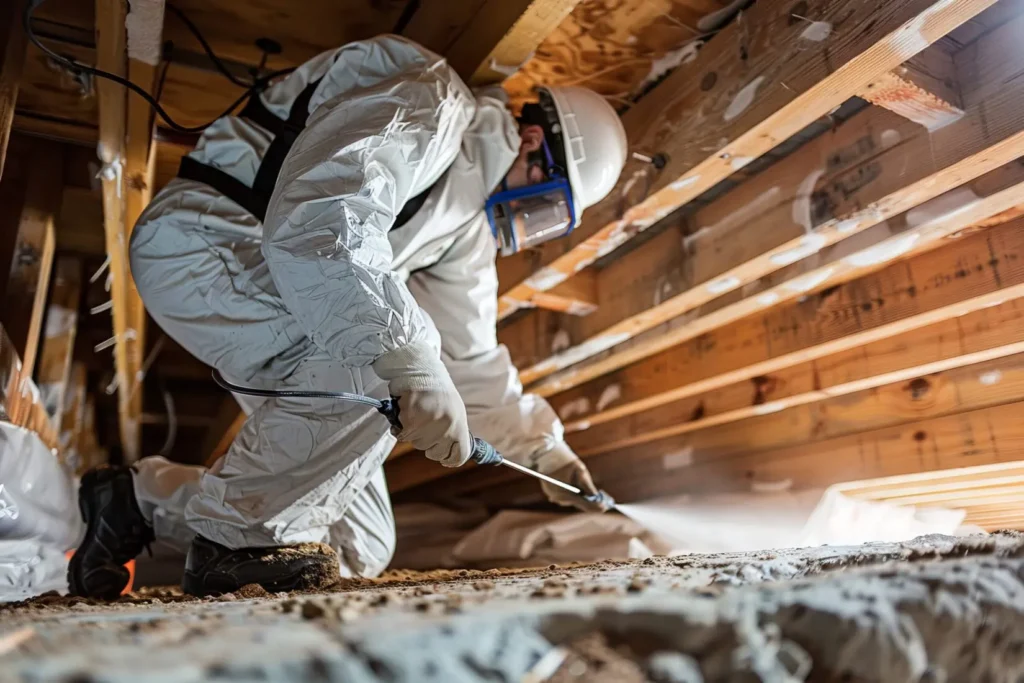
Why Asbestos is a Serious Health Hazard
Asbestos fibres are microscopic. When materials containing asbestos are disturbed during a renovation or demolition, those fibres become airborne. Because they are so small, they can easily be inhaled deep into the lungs.
Once inside the body, these fibres do not break down. Over time, exposure can lead to severe and fatal illnesses, including lung cancer, asbestosis, and mesothelioma. You cannot see or smell asbestos. The only way to know for sure if a material contains it is to have it tested by a professional.
Our Commercial Asbestos Abatement Process
01. Inspection and Testing
We inspect the building and identify any suspect materials. We then take samples and arrange for laboratory testing to confirm whether asbestos is actually present.
02. Regulatory Compliance
We handle the administrative side. We follow all applicable federal, provincial, and municipal regulations for asbestos removal. We file the required notices and ensure your project is fully compliant.
03. Strict Containment
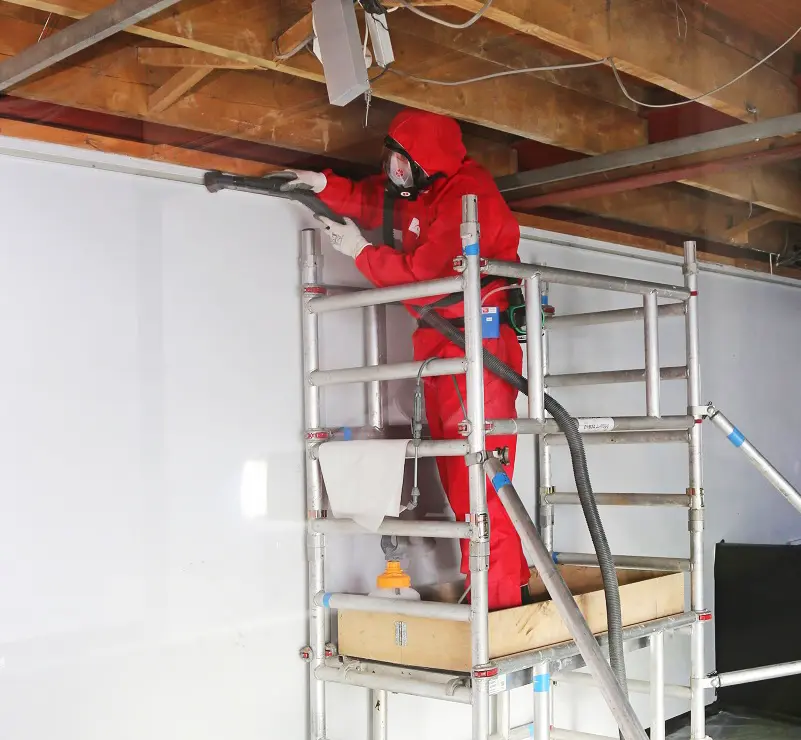
We set up physical barriers and use negative air pressure to prevent asbestos fibres from spreading to clean areas of your building. We seal off the work area completely.
04. Controlled Removal
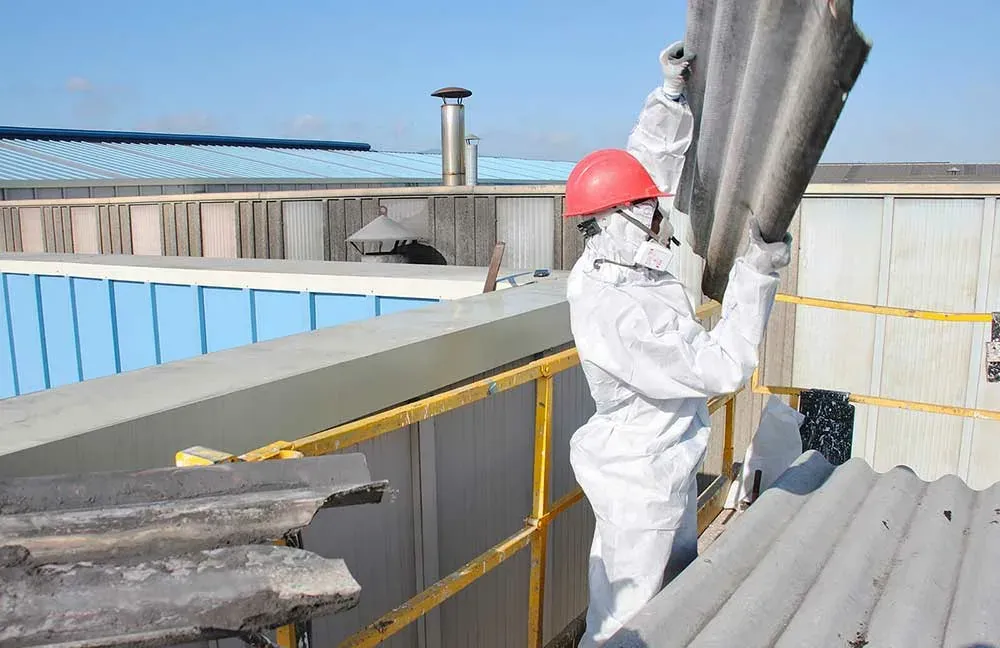
Our certified crews, wearing full protective gear, remove the asbestos following strict safety protocols. We do not cut corners.
05. Disposal
All asbestos waste is securely bagged, sealed, and disposed of at an approved facility according to environmental regulations.
06. Clearance and Documentation
We arrange for independent third party clearance testing to prove the air is safe. We provide full documentation of the entire process for your records and regulatory compliance.
What to Do While You Wait for Us
- Restrict access to the area. If you suspect asbestos has been disturbed, keep employees, tenants, and the public away from the immediate zone to avoid exposure to airborne fibres.
- Turn off the HVAC system. Shut down the heating and air conditioning to prevent the building's ventilation system from spreading asbestos fibres to other areas.
- Do not sweep or use fans. Avoid dry sweeping, vacuuming with a standard vacuum, or using fans, as these actions will stir up dust and push fibres into the air.
- Call FloodWyse. We will dispatch a certified abatement crew to assess the situation, set up containment, and handle the material safely.
Understanding Commercial Asbestos Insurance
Asbestos removal is a highly specialized and strictly regulated process, which means it carries specific costs. Depending on the situation, abatement might be covered under your commercial property insurance, especially if the asbestos was disturbed by a covered event like a burst pipe or storm damage. However, many standard policies contain specific exclusions for pollution and contaminants.
- WHY CHOOSE US
Why Choose FloodWyse for your property
Successful restoration requires more than equipment. It requires careful documentation, consistent communication, trained specialists, and a process that protects the property at every stage.
Rapid Coordination
Clear priorities and response planning from the first call.
Detailed Assessment
Damage mapping that looks beyond visible surfaces.
Consistent Updates
One contact and a clear next step throughout the project.
Complete Recovery
Cleanup, drying, repairs, and reconstruction under one plan.
- SERVICES AREAS
Serving Homes and Businesses Across Canada
FloodWyse supports homeowners, landlords, property managers, and businesses across nearby cities and surrounding communities.
- FAQ
Trusted When The Situation Feels Uncertain
Clients remember the response, communication, respect for their property, and confidence they felt throughout the recovery.
My basement flooded during a storm. Is that covered?
It depends on your policy. Storm surges, overland flooding, and sewer backups often require specific add ons. We recommend calling your insurance provider immediately to see what is covered.
How long does it take to dry a flooded house?
A large flood can take anywhere from five days to two weeks to dry completely, depending on the materials affected and the humidity levels. We monitor the moisture daily and do not remove the equipment until the readings are back to normal.
Can I save my carpets after a flood?
If the floodwater was Category 3 (dirty water from outside), highly porous materials like carpet and underpad usually have to be thrown away. They cannot be fully sanitized and will grow mould.
What should I do with my wet furniture?
Do not try to move heavy items if it is unsafe. We will help you move furniture out of the affected area, assess what can be restored, and safely dispose of what cannot.